Understanding the new waste carrier, broker, and dealer reforms in England and Wales
by Roisin Ellis
View post
For many consultants, career progression can come with an uncomfortable question - does moving forward eventually mean moving away from the technical work that built your career in the first place?
I don't think career progression has to mean leaving technical work behind. Technical expertise remains immensely valuable as you progress, what changes is how you use that expertise, how you share it with others, and the influence you can have beyond the piece of work immediately in front of you.
Early in my career, influence often came from having the technical answer. With experience, I've learned that leadership isn't necessarily about being the expert in every room, but about creating clarity, asking the right questions and enabling other people to succeed. One of the most valuable things a senior professional can do is build a team that collectively knows more than any one individual ever could.
One of the things I've come to appreciate is how differently people can contribute as their careers develop.
Some people thrive by becoming highly technical specialists, developing deep knowledge in a particular area and perhaps ultimately focusing on work such as technical review or expert witness services. Others are at their best working across disciplines, where their strength lies not only in understanding their own technical area but in seeing how it connects with other parts of a project and bringing those perspectives together to solve a broader problem.
Both are valuable career paths, and progressing in consulting shouldn't require everyone to eventually fit the same mould. People tend to do their best work when they understand where their strengths lie and have the opportunity to build a career around them.
That becomes particularly important as the problems we're being asked to solve become more complex.
In water, very few challenges exist neatly within the boundaries of one discipline.
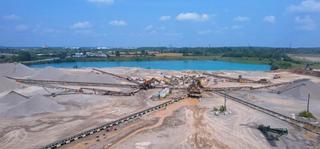
Mine closure is a good example. Water considerations can intersect with ecology, toxicology, erosion, soils, and a range of other technical areas. The individual disciplines matter greatly on their own but so does understanding how they interact and how a decision in one area might change the outcome in another.
As our industry continues to evolve, I think we'll need even stronger multidisciplinary collaboration. That doesn't diminish the importance of deep technical expertise, it makes that expertise more valuable when it can be brought together with different perspectives to solve a larger problem.
The same principle applies to innovation. New technologies, and new ways of working can create new possibilities, but innovation only generates value when it can be implemented in the real world. For me, some of the most rewarding work happens at that intersection between new thinking and practical experience, where we can develop solutions that are not simply technically interesting, but practical, implementable, and capable of delivering real value for clients.
Perhaps one of the biggest changes in my own career has been how I think about the value I can bring to a team.
I still enjoy solving complex problems, but some of my greatest professional satisfaction now comes from seeing someone else develop. Watching a concept click for someone, seeing their confidence grow and then seeing them apply that understanding independently is incredibly rewarding.
Our experience as senior professionals shouldn't just help us provide an answer more quickly. It should help us ask better questions, share what we've learned, and give the people around us opportunities to develop their own judgement.
I don't see mentoring and technical excellence as competing priorities. Developing capable people strengthens the technical depth of a team, particularly when those people go on to bring ideas and expertise to the table that you don't have yourself. To me, that is one of the signs of a strong technical team.
This is something I really value about working at SLR. The breadth of disciplines we work alongside gives our people opportunities to contribute to complex, multidisciplinary problems while continuing to develop their own technical expertise. There is room for people who want to deepen their specialist knowledge, people who enjoy connecting disciplines and solving broader problems, and people whose careers increasingly involve mentoring and developing others.
For senior professionals considering what the next stage of their career might look like, I think that distinction matters. Progression doesn't have to mean moving further away from the technical work you enjoy. It can mean deepening your expertise, broadening how you apply it, increasing your influence across more complex problems or using what you've learned to develop expertise in others.
Technical leadership can take many forms, and what it looks like should continue to evolve throughout a career.
The same thinking shapes how we approach complex water challenges with our clients.
Water rarely exists as an isolated technical issue. Whether we're considering mine closure, surface water or groundwater challenges, the decisions being made can intersect with ecology, toxicology, erosion, soils and other technical disciplines.
SLR's multidisciplinary environment allows us to bring those perspectives together around the broader challenge, while still drawing on the depth of specialist expertise within individual disciplines.
For clients, that means looking beyond one technical question in isolation to understand how different considerations interact, where decisions in one area may have implications elsewhere, and how technical solutions can ultimately be translated into practical and implementable outcomes.
That's where I believe technical expertise has its greatest impact, not simply in finding an answer, but in helping clients understand the wider problem and bringing together the right expertise to solve it.
If you’re navigating a complex water challenge, or you’re a water professional interested in the kind of technical career you can build at SLR, get in touch with Ines Epari to continue the conversation.
by Roisin Ellis