
ISO 14001:2026 and IED 2.0: From environmental compliance to strategic transformation
by Sebastian Katsch, Claire Bushell
View post
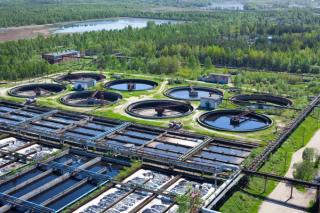
Effluent treatment plants (ETPs) rarely receive much attention when they're working properly. In many organisations, they sit in the background, quietly doing their job while operational focus remains on the assets that generate revenue.
Yet these facilities are often far more important to business performance than many people realise.
If wastewater cannot be treated and discharged effectively, production can quickly become constrained. In some cases, treatment issues can lead to increased operating costs, permit compliance concerns, reduced production capacity, or even temporary shutdowns. As businesses continue to increase output and pursue ambitious sustainability goals, many are finding that the performance of their ETPs has a direct influence on operational resilience and long-term success.
Manufacturing businesses are continually looking for ways to increase productivity and improve profitability. However, greater production often results in higher wastewater volumes, which can place increased pressure on existing treatment infrastructure.
In sectors such as food and drink manufacturing, production volumes have increased significantly over recent decades. While production facilities have often evolved to support growth, wastewater treatment systems have not always been upgraded at the same pace.
The result is that an ETP designed for historic operating conditions may now be expected to manage significantly greater loads than originally intended.
This doesn't necessarily create an immediate compliance issue. In fact, many treatment plants continue to operate within permit limits despite being under increasing operational stress. However, aging infrastructure, rising chemical consumption, increasing energy demand, and reduced process resilience can all be warning signs that capacity is being stretched.
Historically, ETPs have often been viewed as a regulatory requirement rather than a strategic business asset.
The goal was simple: remain compliant.
While compliance remains critical, leading organisations are increasingly recognising that wastewater treatment plants can deliver value beyond meeting permit conditions. A well-managed facility can support operational efficiency, reduce costs, improve sustainability performance, and provide resilience during periods of increased production.
When treatment systems are operating effectively, businesses often benefit from lower chemical and energy use, improved reliability, reduced downtime, and better environmental performance. These advantages may not always be immediately visible, but they can have a significant impact on the overall cost and efficiency of an operation.
The question is no longer simply, "Are we compliant?"
Increasingly, organisations are asking, "Are we getting the best possible performance from our treatment assets?"
One challenge frequently encountered by organisations operating multiple sites is inconsistency.
Over time, different facilities often develop different approaches to operation, maintenance, monitoring, training, and incident management. Individual sites may perform well in isolation, but variations in standards and practices can make it difficult for management teams to understand risks across a portfolio.
For example, some sites may focus solely on collecting the monitoring data required for regulatory compliance. Others may track treatment efficiency, loading rates, chemical consumption, and asset performance, providing far greater insight into how effectively the plant is operating.
Neither approach is necessarily wrong, but the difference in available information can make it difficult to compare sites and make informed investment decisions.
Inconsistent reporting can also mask emerging problems. Issues such as recurring spills, chemical losses, infrastructure deterioration, or equipment failures may become accepted as "normal" at one location while being treated as significant incidents at another.
Without a consistent approach, organisations can struggle to identify where investment is most needed and where risks are developing.
One of the most interesting aspects of ETP optimisation is that major improvements do not always require major capital expenditure.
Many facilities continue to operate reliably but not necessarily efficiently. Independent reviews frequently identify opportunities to improve treatment performance through operational changes rather than new infrastructure.
These opportunities can include better process control, improved maintenance planning, optimised chemical dosing, more effective use of existing equipment, or enhanced data collection and analysis.
In some cases, relatively small operational improvements can generate substantial cost savings over time. Reduced chemical consumption, lower energy use, and improved process stability can all contribute to reducing the overall cost of treatment while maintaining or improving compliance performance.
Just as importantly, these improvements can increase resilience, helping facilities accommodate changes in production without creating operational risks elsewhere in the business.
As organisations develop increasingly ambitious sustainability targets, wastewater treatment is becoming an area of growing interest.
Energy consumption, chemical use, sludge production, water efficiency, and carbon emissions are all influenced by how effectively an ETP is operated and maintained.
When discussing sustainability initiatives, wastewater infrastructure is often overlooked in favour of more visible projects. However, treatment facilities can offer meaningful opportunities to reduce environmental impacts while delivering operational benefits at the same time.
The most sustainable treatment plant is not necessarily the newest one. Often, the greatest opportunities lie in understanding existing assets better and ensuring they are operating at their full potential.
Even the most experienced onsite teams can sometimes become accustomed to the way things have always been done.
This is where independent reviews can add value.
An external perspective can help organisations benchmark performance across sites, identify opportunities for improvement, and highlight emerging risks before they become significant problems. It can also provide management teams with greater confidence that operational data accurately reflects the condition and performance of their assets.
Increasingly, organisations are moving beyond simple compliance audits and looking for a deeper understanding of how their treatment infrastructure supports wider business objectives.
Effluent treatment plants may not be the most visible assets within an organisation, but they are often among the most critical.
As production demands increase, regulations evolve, and sustainability expectations continue to grow, businesses need confidence that their treatment infrastructure can support both current operations and future ambitions.
The organisations that derive the greatest value from their ETPs are often those that stop viewing them solely as compliance obligations and start recognising them as strategic operational assets.
After all, when a treatment plant performs well, few people notice. When it doesn't, everyone does.
by Sebastian Katsch, Claire Bushell

by Simon Hodgson, Daniel Witte, Blake Zheng

by Ashley Gibson